PREPARE AND SET
Long-wearing complexion makeup is founded on chemical compatibility. When primer polymers, liquid foundation binders, and setting powder mineral flakes bond cleanly, makeup remains intact across shifts in temperature and facial movement.
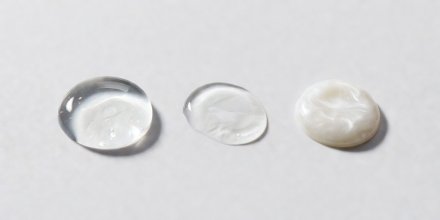 PHASE MATCHING
Silicone vs. Water Formulation Pairing
Cosmetic foundations are formulated as either water-in-silicone, silicone-in-water, or water-in-oil emulsions. Applying a high-dimethicone primer under a water-based tint creates an immiscible barrier where neither product can anchor to the skin, causing slipping within hours.
Workshop Diagnostic: Read the first 4 ingredients. If water (Aqua) is followed by dimethicone or cyclopentasiloxane, pair it with silicone-tolerant primers and stippling tools.
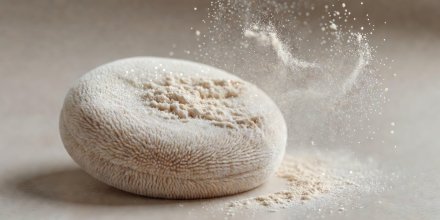 MINERAL MORPHOLOGY
Talc, Silica, and Mica Under Scrutiny
Setting powders vary significantly in particle geometry. Micronized silica spheres roll smoothly and scatter direct light for a pore-blurred effect, but can create a stark white cast under harsh flash photography if applied too heavily.
Sericite mica provides subtle translucency and natural skin slip, while kaolin clay and cornstarch aggressively absorb mid-day sebum in oily T-zones without balling up.
THE 4-STEP BASE LOCKING SEQUENCE
Follow this numbered workflow to prevent patchiness and create an even, durable canvas.
Skin Hydration Anchor
Apply moisturizer and sunscreen, then wait a full 3 to 5 minutes before touching primer. Applying primer over tacky, unset skincare dissolves the primer's film-forming polymers before they can set.
Targeted Primer Pressing
Do not smear primer over the entire face like lotion. Warm a pea-sized amount between your finger pads and press firmly into pore-dense areas (the nose bridge, chin, and central cheeks).
Foundation Transfer
Dispense liquid onto a stainless steel palette. Pick up small amounts with a dense synthetic brush or damp sponge. Work in thin, translucent layers from the center of the face outward.
The Puff Rolling Press
Work setting powder into a velour puff, rub the puff in your palm to distribute the powder evenly, then roll it firmly onto oily zones. Finish by dusting away excess with a soft, clean natural brush.
BAKING VS. VELOUR ROLLING VS. DIFFUSED DUSTING
The Controlled Bake
Depositing a visible layer of loose translucent powder over concealer and leaving it for 2 minutes allows natural body heat to cure the liquid pigments with the powder particles. Ideal for warm stage lights, bridal events, and high-humidity environments.
Caution: Avoid baking over dry, dehydrated mature under-eyes, as it emphasizes fine skin micro-folds.
Micro-Diffused Dusting
Using a large, tapered flame brush, dip the tips lightly into setting powder, tap off the excess, and sweep gently across the face. This removes surface stickiness while preserving the skin's natural radiance and moisture sheen.
Best for: Normal, dry, and mature complexions wearing lightweight tinted serums.